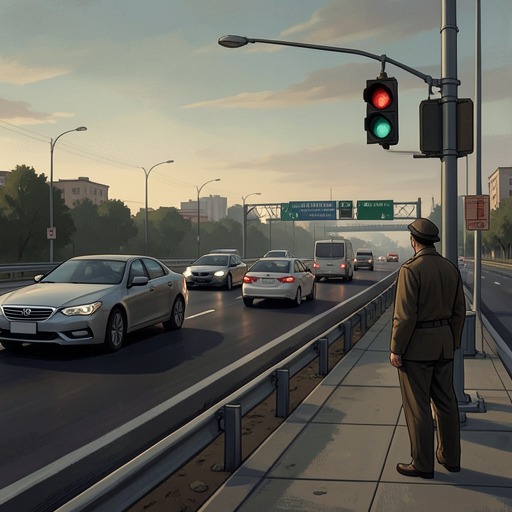
London Congestion Charge Scheme
The Wisdom of CrowdsLondon’s congestion charge, introduced in February 2003, turned a daily traffic jam into a test of whether a price could help people coordinate their use of scarce road space. The plan charged drivers to enter central London during the day, seeking both to reduce congestion and to raise money for public transport. Its results were more measured than a simple campaign to clear the streets: traffic fell, but the roads remained full, with vehicles moving more freely. The episode illustrates how a collective problem can improve when the costs of individual choices are made visible to the people making them.
The gridlock that prompted the charge
In 2002, central London’s traffic seemed almost permanent. On a typical day, a quarter of a million vehicles entered an area of eight square miles, where they met a million commuters using public transportation. The city’s tightly packed, narrow, winding streets were poorly suited to the volume. Average traffic speed stayed below ten miles an hour; on a bad day, it dropped to three, slow enough that a pedestrian could walk faster without breaking a sweat.
The congestion changed the political argument as well as the traffic. London mayor Ken Livingstone, an avowed socialist, became an advocate of a plan associated with capitalist economists: charge people to drive into the center. In February 2003, London began requiring drivers entering central London between 7 a.m. and 6:30 p.m. to pay £5. The city installed 230 cameras to record license plates; drivers who failed to pay and were recorded faced an £80 fine. The plan was expected to raise £180 million annually for investment in public transportation and cut congestion by 20 percent.
Making road costs visible
The charge rested on the idea that a driver entering the city and worsening traffic imposes costs on everyone else without paying them directly. A driver trapped in bumper-to-bumper traffic might feel that the delay itself is already a sufficient penalty. The logic of congestion pricing makes a different point: the private inconvenience of sitting in traffic does not necessarily account for the additional delay imposed on other road users. The toll was an attempt to collect that bill.
Economist William Vickrey had championed congestion pricing as a way to allocate road space, a scarce resource, by making the costs and benefits of decisions more apparent. When a road is free, many people choose to drive on it during rush hour, even when it would be better for some to travel at another time, take public transportation, or work from home. A toll changes the choice each driver faces: whether a particular trip is worth its cost. The expected result is not simply fewer journeys, but a different distribution of them across times and modes of travel.
Results and the meaning of success
The London scheme was crude compared with the responsive pricing Vickrey imagined, in which a road’s toll could vary with traffic, weather, or vehicle type. Yet it performed better than many noneconomists expected. Traffic fell by almost 20 percent, congestion was significantly reduced, and one study found that cars could travel 40 percent faster. Even so, the average speed amounted to only eleven miles an hour: an improvement, not an escape from the city’s constraints.
The reduction in traffic prompted concern that the plan might have worked too well. But the purpose of congestion pricing was not to stop people driving. From an economic perspective, leaving a highway empty is hardly better than filling it beyond capacity; the aim is to coordinate trips by balancing the benefit a driver receives against the costs imposed on others. The roads remained full of cars, only moving more easily. Their flow, the account argues, had become a better reflection of how much people valued driving. In that sense, London traffic had become wiser: the result was not an empty road, but a more coordinated one.